17+ Braided Hairstyles for Long Fine Thin Hair to Copy
Braids can be a smart way to give fine, thin hair more visual structure, especially when you use clean parting, intentional placement, or a slightly loosened weave to make each section look more substantial. This collection leans into those details, from sleek, scalp-hugging starts to softer crowns with a bit of lift, plus a few braid-adjacent ideas that borrow the same segmented look.
You will see single braids worn forward over the shoulder, center-back statement braids, and balanced twin plaits that frame the face. Some looks rely on accessories like beads, bows, or ribbon to add emphasis without changing the braid pattern. If you are deciding what will suit your day, compare where the braid begins, how tight the top is, and whether the ends are fully braided or left a little straighter for a lighter finish.
Side-Swept Fringe with Over-the-Shoulder Braid
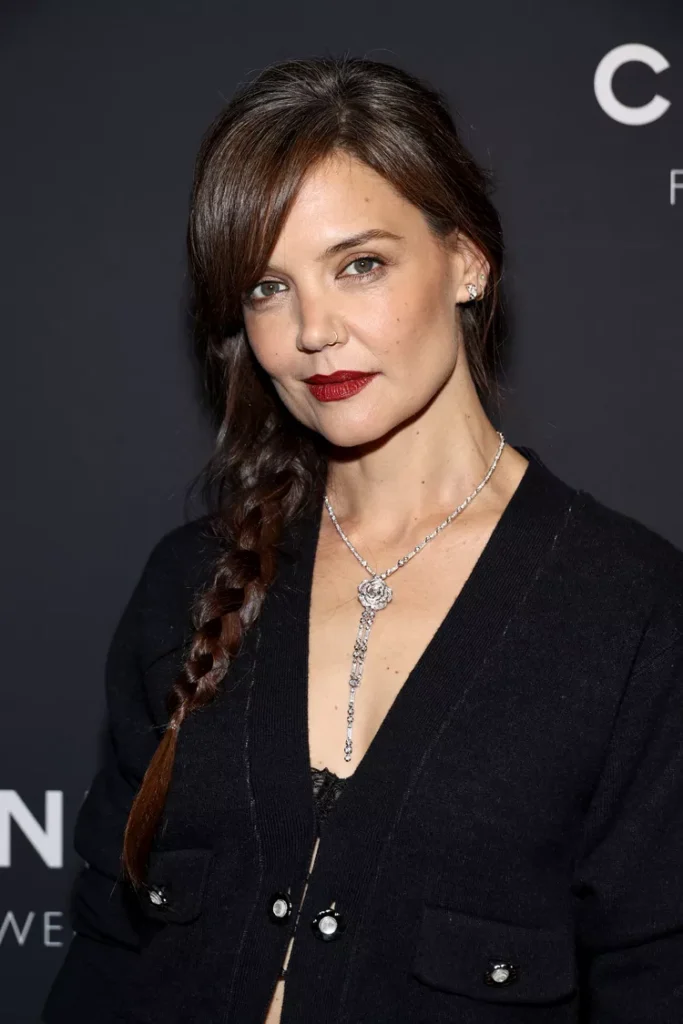
Deep side-swept bangs lead the look, with the rest gathered into a single braid worn over the left shoulder. The crown is smoothed without looking lacquered, so the top stays soft and natural. The braid starts low, below the ear, which keeps attention on the fringe and front shape. Clear sectioning gives the plait definition while staying simple. Handy for a polished side braid that still feels touchable at the roots.
Glossy Center-Part Braid Worn Down the Back

Start with a crisp center part, then sweep the hair tight to the scalp for a glossy, controlled finish. The length is braided into one long, uniform plait that falls down the back rather than being brought forward. With the top kept so sleek, the braid becomes the main texture in the style. This photo is useful for communicating a sharp, minimal look where flyaways are not part of the intent.
Twin Braids with Bead-Like Accents

Clean center parting and tightly smoothed sides set up two thick braids worn forward over both shoulders. Small light bead-like accents spaced along the lengths add sparkle and rhythm without changing the braid pattern. The braids look evenly segmented and deliberately structured, giving a graphic finish. If you want standard twin plaits to feel more styled, this shows how accessories can carry most of the visual impact.
High-Start Double Braids with Straighter Ends

These twin braids start close to the scalp with a defined, tidy ridge, then continue into long pigtail lengths worn forward. The braid definition is strongest through the mid-lengths, while the ends become looser and look partly straight. That transition makes the style feel lighter at the bottom and less heavy than fully braided ends. The symmetry from the centered part keeps the look balanced from the front. Use this as a visual comparison if you are deciding between a braid that begins high at the hairline and one that starts lower near the neck.
Sleek High Braided Pigtails with Center Part

With a neat center part, the hair is pulled into two high sections and braided into chunky, even pigtail plaits. The scalp area is brushed smooth and tight, which makes the braid pattern look especially crisp. High placement gives a lifted, sporty feel compared with low pigtail braids. Small elastics secure the ends for a clean finish. Bring this image when placement matters more than an intricate braid start.
Classic Low Twin Three-Strand Braids

Two low braids hang evenly on both sides, each with a straightforward three-strand structure. The hair is divided into two sections under a cap, so the focus stays on the braids themselves. The plaits look smooth and consistent, with elastics securing the ends. Compared with high pigtail braids, the low start makes the outline feel calmer and more traditional. This is the simple baseline to reference when you want clean symmetry without extra details.
Low Ribbon-Woven Segmented Ponytail

From the back, the hair is gathered into one low ponytail and styled with a wide lavender ribbon running down the length. Instead of a clearly plaited braid, the ribbon creates big rounded sections that read as bubble-like segments. The spacing gives strong visual structure and makes the ponytail look intentionally designed. If you like the impact of a braid but want a smoother, more graphic finish, this is a useful reference image. It also shows how a single accessory can define the whole pattern from top to bottom.
Silver Side Braid with Fishtail-Like Pattern

Swept fully to one side, the length is braided and worn over the shoulder and chest. The pattern looks flatter and more interlaced than a basic three-strand, suggesting a fishtail-like weave, and the silver-gray color makes the texture stand out. Hair at the top is kept smooth and pulled away from the face. A small elastic finishes the end. Useful when you want maximum braid detail without accessories.
Platinum Sleek-Top Chunky Three-Strand Braid

Brushed back smoothly at the head, the hair continues into one thick three-strand braid centered down the back. The plait is broad and dimensional, with wide loops that make it look fuller through the lengths. That contrast between a flat, sleek start and a chunky braid tail defines the style. A small tie secures the end with no added decoration. Good for showing a bold single braid paired with a clean top.
Ombre Twin Braids with Fishtail-Like Texture

Two long braids hang evenly down the back with a clean center part at the crown. The dark-to-blonde ombre becomes more noticeable as it moves through the braid lengths, emphasizing the woven pattern. Each braid is secured near the bottom, leaving a short unbraided tail on both sides. Compared with forward-worn pigtail braids, this back-hanging placement keeps the look tidy and symmetrical from behind. Keep this photo in mind if you want the braid pattern to highlight a multi-tone color shift.
Silver-Lavender Twin Braids Worn Forward

Two neat braids are brought to the front so they frame the shoulders evenly. The scalp area looks smooth and controlled, while the braids stay uniform and moderately tight down the lengths. Small elastics tie off the ends, leaving straight, tapered tails for a slightly lighter finish. The cool silver-lavender tone makes the plaiting easy to read in a quick glance. Use this as a reference for how much the outline changes when twin braids are worn forward rather than down the back.
Oversized Loosened Braid with Long Tail
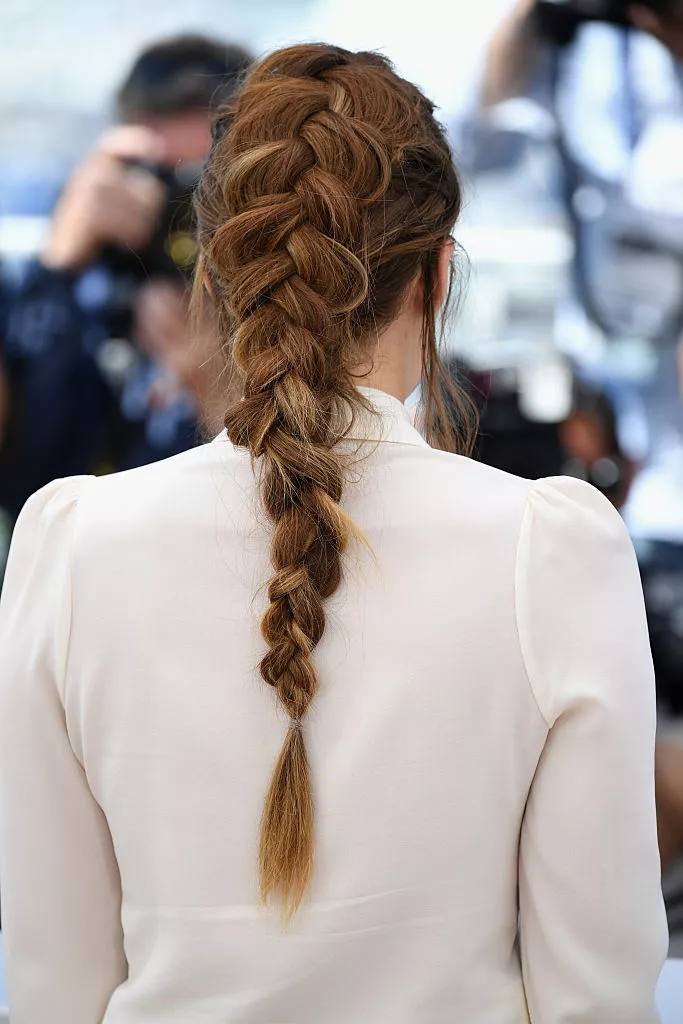
One oversized braid runs straight down the center back, with sections pulled outward for a full, pancaked shape. Soft flyaways and a slightly messy finish keep it from looking too tight or pristine. The braid narrows near the bottom, then continues into a longer unbraided tail. Unlike sleeker single braids, volume comes from widening the braid itself rather than from lift at the crown. Useful when you want airy texture and thickness.
Crown Braid Updo with Tucked Back
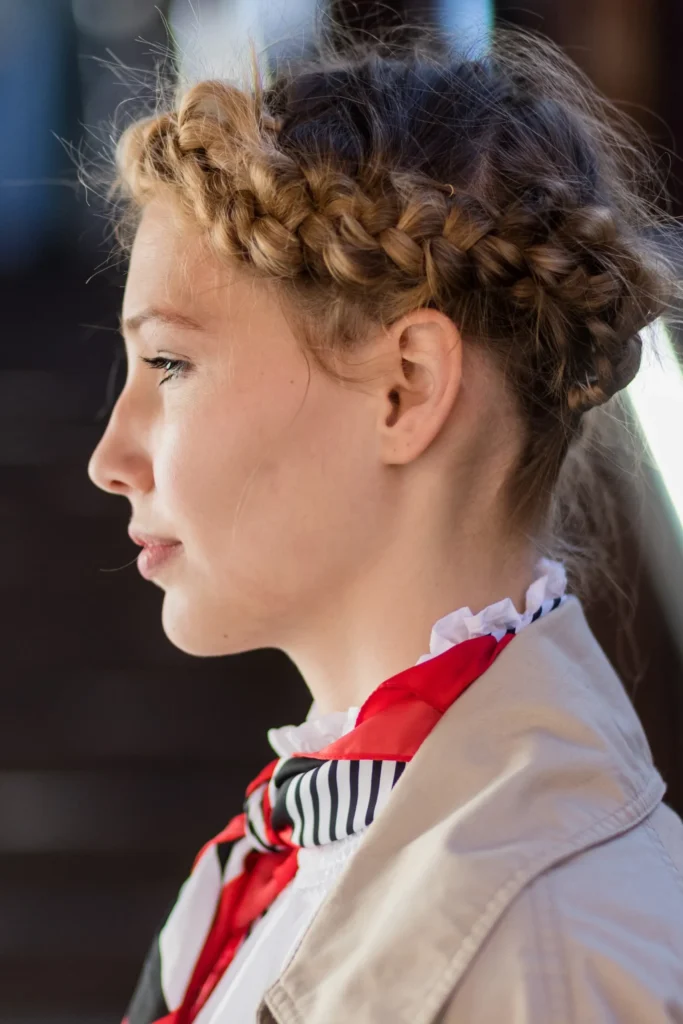
A thick braid wraps around the head like a headband, sitting high and prominent above the ear in profile. The remaining length is tucked and pinned up at the back, so nothing hangs down. The braid looks rounded and full, with a few wispy flyaways softening the edges. Compared with center-back braids, this shifts attention to the perimeter and the braided frame. A strong choice when you want braids with hair secured up.
Extra-Long Twin Braids Down the Back
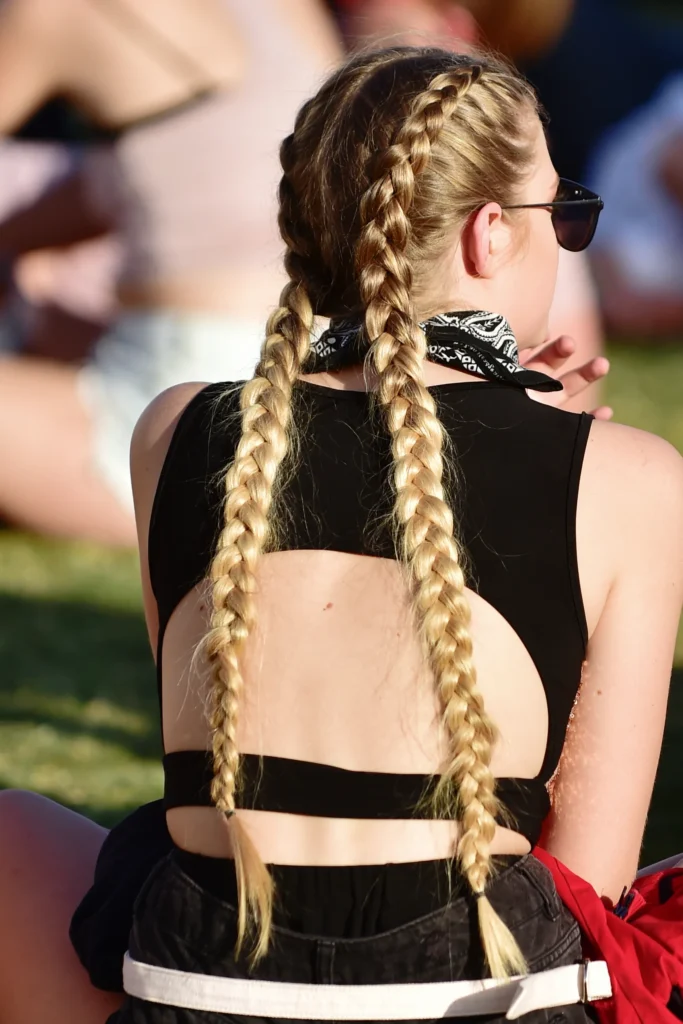
Two matching braids fall straight down the back from a centered part, staying chunky and consistent through most of the length. The symmetry is the statement here, with both plaits mirroring each other in thickness and spacing. Because the braids extend very long, the look feels elongated and clean rather than busy. This differs from forward-worn twin braids, which put more emphasis on the face and chest area. Use this image when you want a straightforward back view that clearly shows length and balance.
Wide Crown-Start Center Braid in Silver Gray
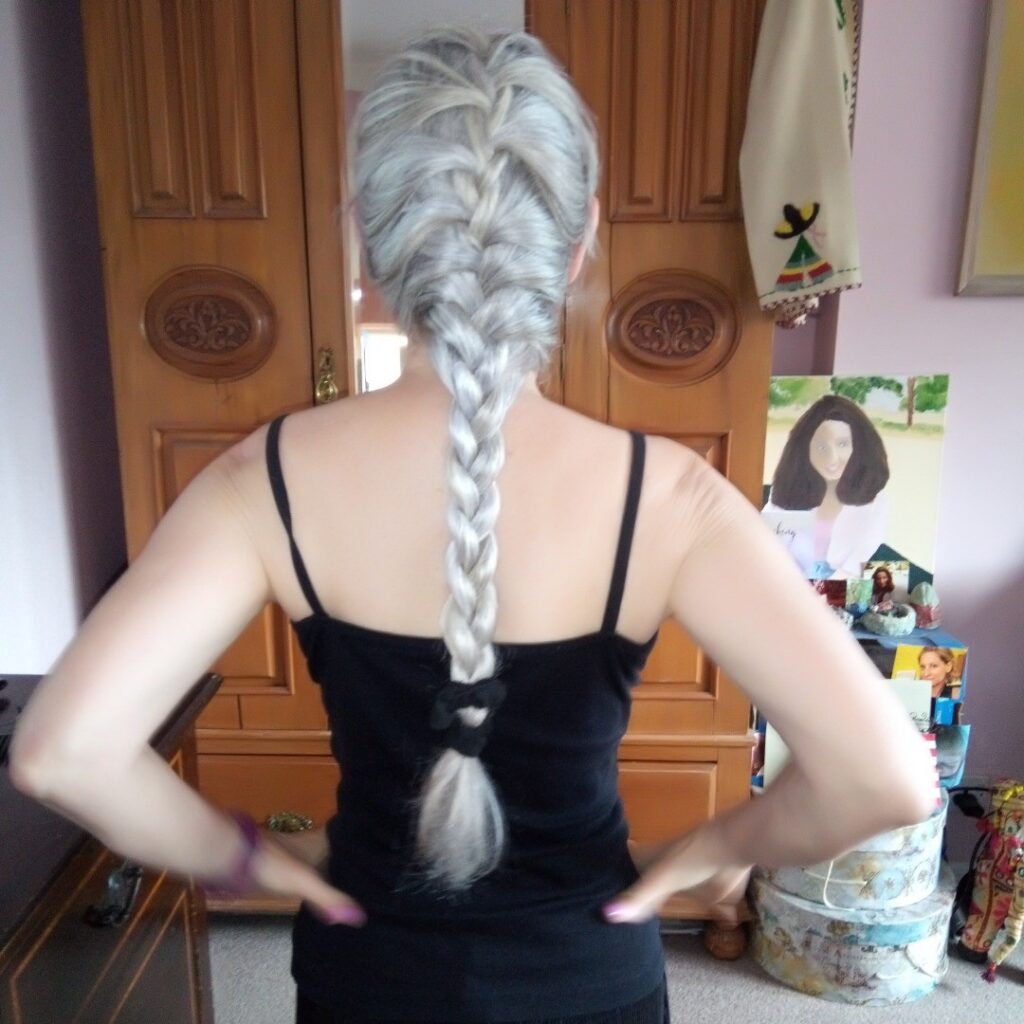
Beginning high near the crown, a single wide braid tracks straight down the center back. Large, rounded sections make the segmentation easy to see, especially in silver-gray hair. The plait loosens slightly toward the bottom and ends with a short tail below the tie. This feels more structured than a side braid because it emphasizes one strong vertical line. Helpful when the goal is a single centered braid as the entire design.
Braided Sweep into a Low Ponytail with Wrapped Detail
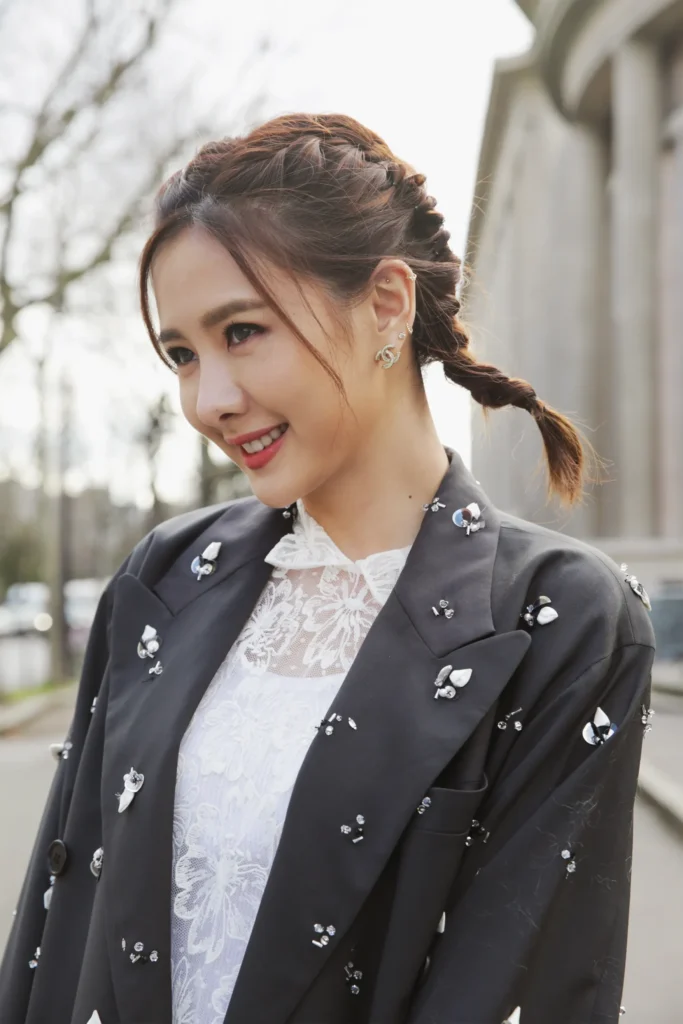
Braided sections sweep back toward a low ponytail, giving the top and sides extra structure before the tail begins. A small braid or twist wraps around part of the ponytail, adding a second point of detail without turning the whole length into a full braid. Two face-framing strands are left loose at the front, which keeps the hairline softer than fully pulled-back looks. Compared with classic pigtail braids, this design mixes braid texture with a ponytail finish. Show this image if you like braids but want the flexibility of a ponytail shape.
Long Silver Twin Three-Strand Braids Worn Forward

Near-center parting leads into two very long, even three-strand braids worn forward over the shoulders. The plaits stay consistent from top to bottom, so the classic pattern and length do the work. A few flyaways at the hairline give a slightly lived-in edge rather than an ultra-slick finish. Compared with other twin-braid options, this one is about uniformity and length, with no added accessories or complex start.
Double Braids into Bubble Ponytails with Bows

A center part feeds into two braided sections along the upper sides, then transitions into twin ponytails. Each ponytail is divided into multiple bubble segments with evenly spaced elastics, creating a rounded, sculpted outline. Matching black ribbon bows sit near the top for a symmetrical accent. The key difference from fully braided pigtails is the smooth length between the ties. Useful for a playful, graphic braid-adjacent style shown clearly from the back.
How to Choose the Braid Shape That Looks Most Intentional
If you want your hairline and part to be the focal point, the sleek center-part looks and high pigtail placement keep everything crisp and graphic. When you would rather soften the front, the side-swept fringe with a low-start braid shows how a braid can look polished without pulling the crown too tight. For the most volume effect in a single braid, the intentionally widened, loosened braid down the back is the clearest example of how section shape changes the final impression.
Twin braids give the strongest symmetry, and this set includes both forward-worn versions that frame the chest and back-hanging versions that emphasize length. If you prefer a pinned-up finish, the crown braid updo offers that braided headband effect with the rest tucked away, and you can compare it to more formal pinned styles in Updos for Fine Thin Hair That Make Your Strands Look Thicker.